Flooring · 16 December 2025 · 2 min read
Why tiles crack, and why relaying them changes nothing
Cracked tiles are almost never a tiling fault. Relaying them without addressing the substrate repeats the failure.
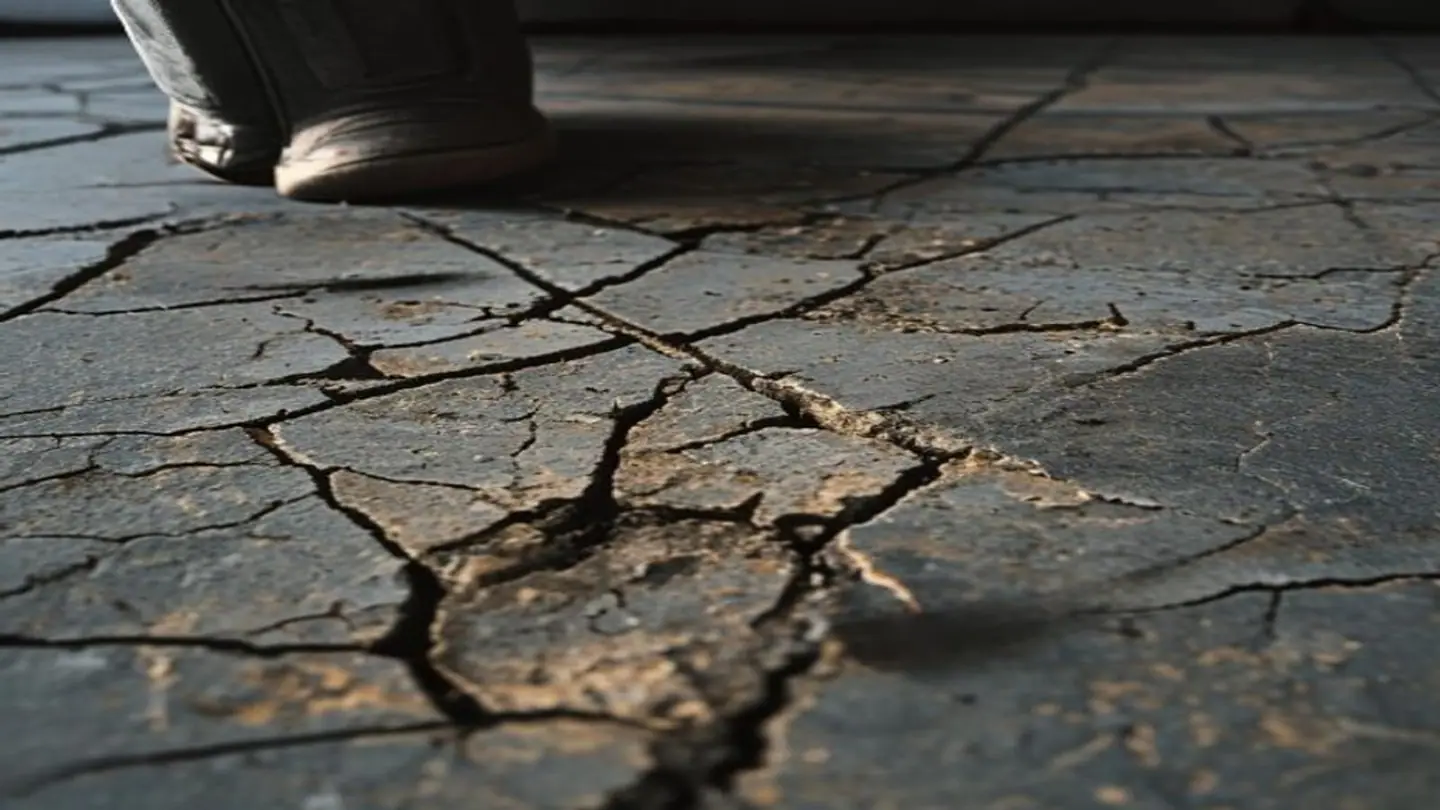
A tiled floor that cracks within a year or two is a common and thoroughly frustrating failure. It is also one of the most predictable, because the cause is nearly always the same.
A tile is a rigid finish
Ceramic and porcelain tiles do not flex. Neither does cement-based grout, in any meaningful sense. Bonded to a substrate, they will faithfully transmit whatever that substrate does.
If the floor beneath moves — even slightly, even seasonally — the movement has to go somewhere. It goes into the weakest element, which is either the grout line or the tile itself.
Where the movement comes from
Several things produce it:
- Timber floor decks that deflect underfoot or move with humidity
- Screeds laid too thin or over insufficiently compacted fill
- Structural movement at junctions between different construction types
- Thermal movement, particularly in areas with underfloor heating or large glazed elevations
- Inadequate curing time before tiling, so the substrate is still shrinking when the tiles go down
Why relaying does not fix it
If a floor cracked because the substrate moves, laying new tiles on the same substrate produces the same result. The client pays twice and gets the same failure, usually within a similar timeframe.
This is why we assess the substrate before quoting any tiling work. If it moves, the fix is not better tiles or better adhesive.
What actually addresses it
Depending on what the assessment finds:
- Stabilising or replacing the substrate, where it is inadequate
- Decoupling membranes, which absorb substrate movement so it is not transmitted to the tile
- Movement joints at the perimeter and at appropriate intervals across large areas
- Levelling compound to bring the surface within tolerance before laying
- Allowing proper curing time, which cannot be shortened by wishing
The moisture question
Separately from movement, moisture in a substrate will break the adhesive bond over time. Where a floor is new, at ground level, or has any history of damp, it should be tested rather than assumed. A moisture barrier specified on the basis of an actual reading is cheap; one omitted on the basis of assumption is expensive.
The short version
If your tiles cracked, ask what the floor underneath is doing before agreeing to have them replaced. The answer determines whether you are buying a repair or a repeat.